Insulating masonry exterior walls from the inside


Is your façade protected? Are there aesthetic or practical reasons why external insulation isn't an option? No problem!
Our solutions for insulating exterior walls from the inside offer a cost-effective way to reduce heat loss, lower energy consumption, and improve indoor comfort. This allows you to preserve the original character of the façade while enjoying a more pleasant indoor climate and reduced energy bills. It’s often the ideal solution for historic buildings, apartment blocks, terraced houses, and other structures with solid exterior walls.
Prefer working with sustainable materials? Then you’ve come to the right place.
The text on this page was automatically translated. Minor translation errors are possible. In case of doubt, the original versions (Dutch and French) are correct.
Download (Dutch version)
The advantages of interior insulation at a glance
- First of all, and not unimportant: interior insulation is almost always more affordable than exterior insulation. There's no need for scaffolding, roof overhangs and sills don’t need adjustment, and you can avoid costly insulation or finishing materials.
- Interior insulation can be installed gradually, room by room, if desired, even by the homeowner.
- Bad weather is never a disrupting or delaying factor, since all work happens indoors.
- By choosing interior insulation, you preserve the existing façade. The charm of your building remains intact, and there’s no need for a planning permit.
What does our solution 'Insulating exterior walls from the inside' consist of?
Scope of this total solution for interior insulation
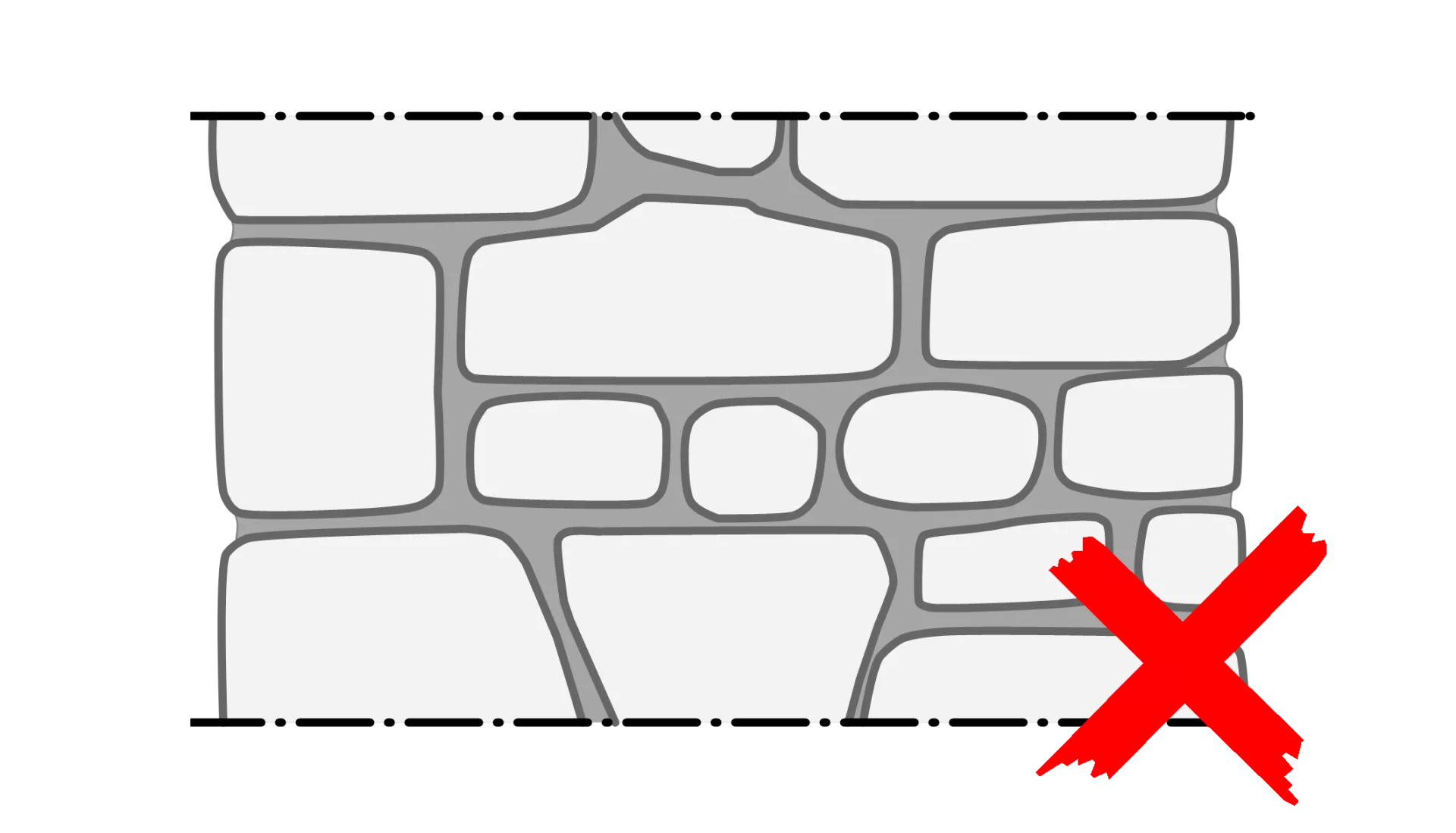
This total solution covers the interior insulation of buildings with solid walls in brick or sand-lime brick (brick or concrete), with or without an insulated cavity. TV 300 from Buildwise also allows it to be applied to concrete, but with a maximum R-value of 4.0 m²K/W. Walls made of other materials, such as natural stone, are not covered.
Analysis and background information on internal insulation
Installing insulation is not an isolated action. Internal insulation should be considered part of a comprehensive renovation strategy that takes into account the insulation and airtightness of the entire building envelope, as well as potential improvements to heating and ventilation systems and additional measures such as overheating protection.
That’s why this total solution starts by focusing on some key points before moving on to practical details. The document first discusses:
- the options for insulating walls,
- the impact of internal insulation on the existing wall,
- the risks of insulating from the inside,
- and the conditions a wall must meet to allow internal insulation.
Internal insulation of masonry walls in practice
Five practical build-ups
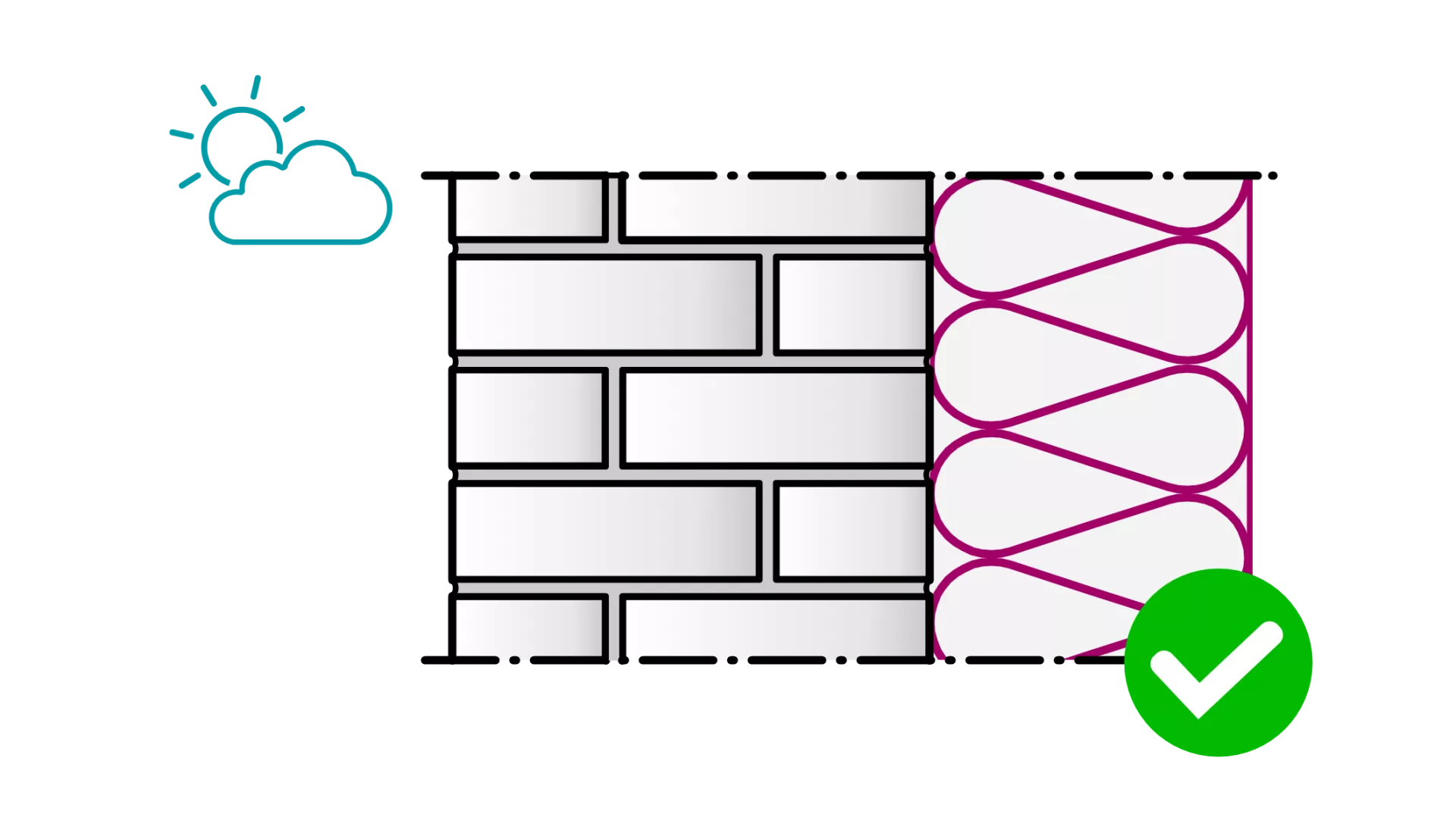
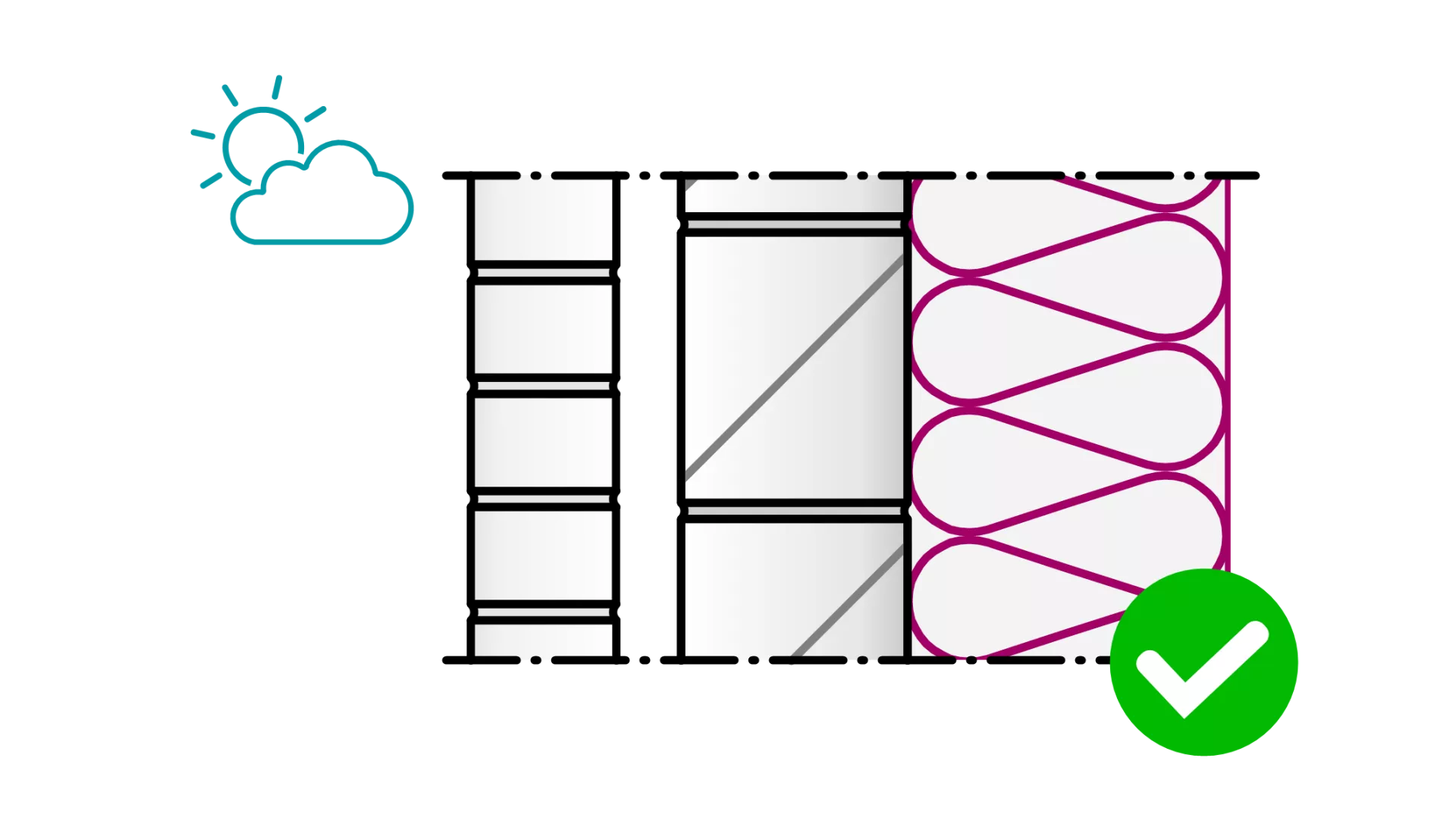
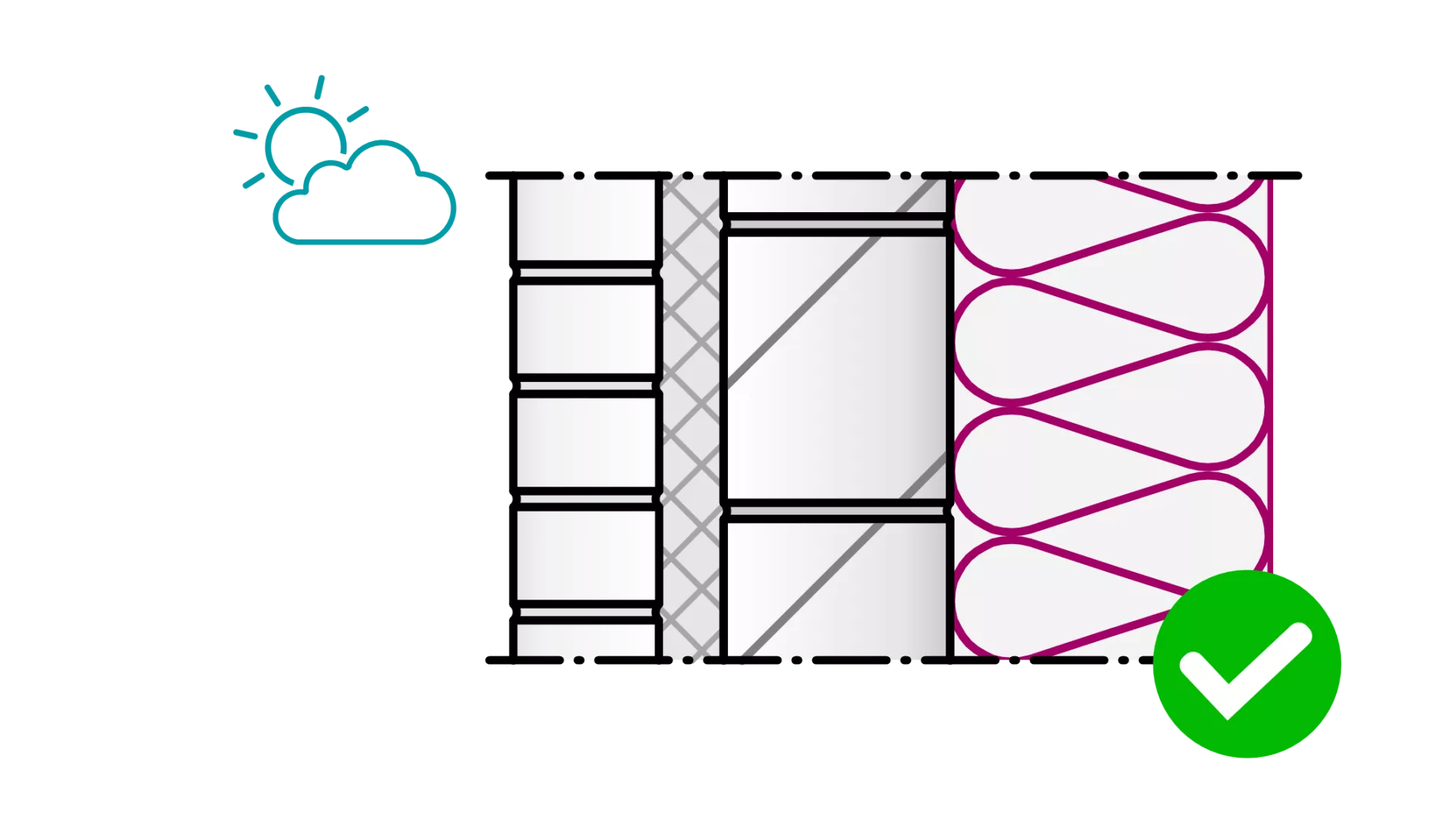
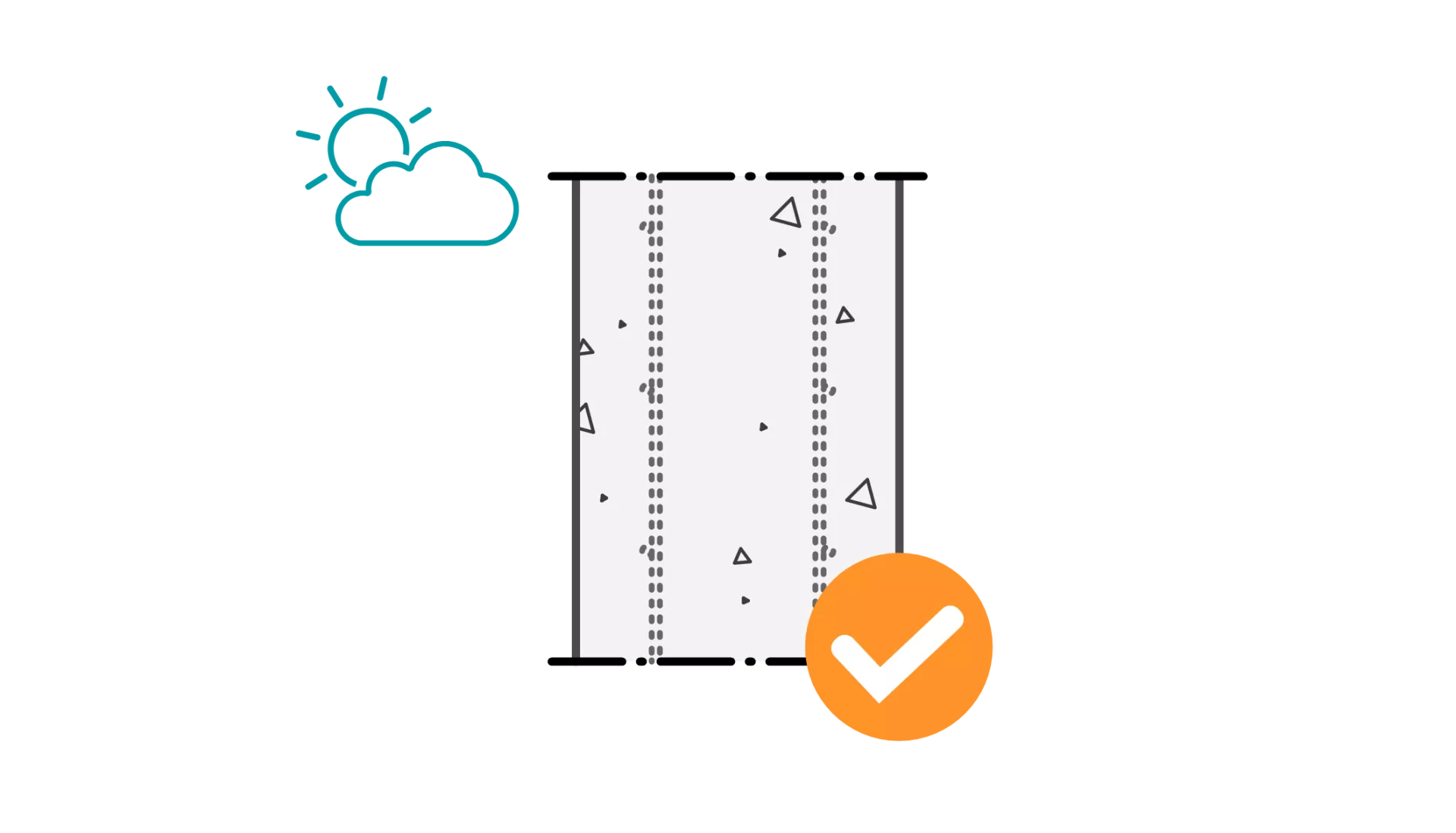
There is a wide range of options for insulating walls internally. This total solution focuses on the following five configurations:


Thermal bridges and junctions
Since insulating masonry walls internally involves integrating other building components, our downloadable total solution also includes detailed solutions for the most common junctions:
- Solid and wooden attic floors
- Solid and wooden intermediate floors
- Solid and wooden floors above basements
- Window details
- External wall junctions
Products we use
Via the links below, you can explore a selection from our product range for:
A great place to start.
Concrete support
We documented this cost-effective internal insulation method in a comprehensive guide (in Dutch and French). It provides essential information on correct execution: build-ups and junctions, with an integrated renovation approach. We also included connection details, 2D drawings, installation instructions and practical tips.
Download the total solution at the top or bottom of this page.
In addition, we offer further support to get you started properly:

Helpdesk
Our products are perfectly suited for the application of interior insulation of exterior walls. They’ve been used successfully in Belgium for over 30 years. The experts on our technical helpdesk know the subject inside and out.
So don’t hesitate to contact our free technical helpdesk. We’re happy to share our expertise and know-how with you.

Find a professional
Get expert advice for your insulation project from one of our professionals.
- You can search for one near you.
- or share more details about your project using our handy tool, and we’ll find a suitable match for you.
Download (Dutch version)
All system solutions
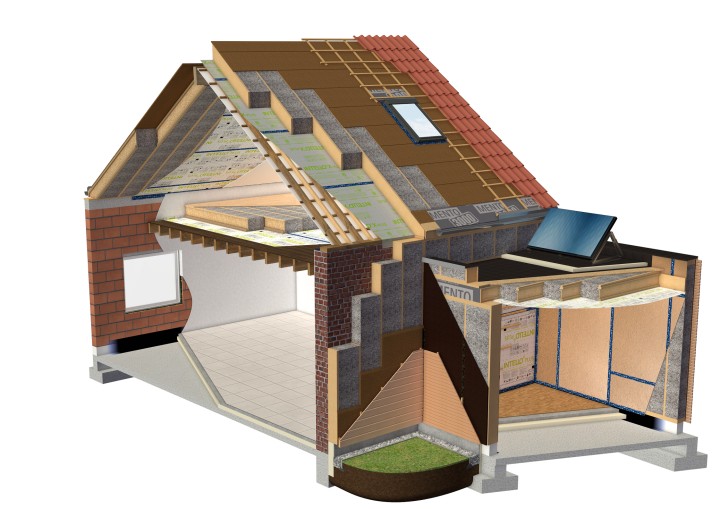
Our system solutions combine all of ISOPROC's expertise. They include guidelines, detailed drawings, and coordinated products for an optimal approach to pitched roofs, flat roofs, walls, joinery, etc.
